All articles

Welcome Summer! This zither photo was sent to us by Rudolph Mueller. His father, Rudolph Mueller Sr. (seated left), is shown enjoying the zither, Schlitz and the company of his friend, Paul Ederegger, on a sunny day in Carl Schurz Park, ca. 1950.


Originally from Prussia, Philip Louis Brachet immigrated to the United States in 1860 and settled in Philadelphia, PA. From his home, he gave music lessons, sold musical instruments and composed numerous pieces for the piano and zither. In this article we present what is known of Philip Louis Brachet, former music teacher, composer and zitherist from Philadelphia, Pennsylvania.
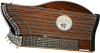

This zither photo was shared by Dick Boak of the Martin Guitar Company. The concert zither, shown below, was made by C.F. Martin, Jr., circa 1882 and is currently on display in the Martin Museum.


Photo Courtesy of C. F. Martin Archives ©

Since picking up the zither at the age of 14 in Munich, Germany, it would not be long before Arthur Schatz's musical talents would gain him notoriety. Trained as a model carpenter, he would later immigrate to Canada to practice his profession. Throughout life, he continued to promote friendship and the cultural traditions of his homeland. In this article we remember Arthur K. Schatz Sr., Munich native and long time resident of Oshawa, Canada.


In Nikolaus Weigel's time, zither tunings abounded and to a certain degree were a matter of personal preference. Recognizing this discrepancy, he set out to standardize and expand its capabilities. In this article, author Fritz Stang examines the life of this musical innovator, whose contributions for the zither have become a recognized standard. Discovered in an old issue of Saitenspiel, this article has been translated from the original German and edited by Jane Curtis.


This zither photo was sent to us by Trish Kellen. The Apollo Zither Club was led by Henry Schaber, pictured front and center with the conductor's baton, and was just one of several zither clubs that existed in Nebraska. This zither club image is circa 1898. For more information on Henry Schaber see "Remembering Henry Schaber."


What was originally intended to be an introductory chapter for a book on the "Golden Age" of the zither soon turned into a sizable project in its own right. Now published, Dr. Joan Marie Bloderer's book Zitherspiel in Wien. 1800-1850 represents a significant expansion of her dissertation of the same name. In this article, Dr. Bloderer shares some of the research experiences from her latest work.


During the 1880s, immigrants by the thousands arrived in Omaha to support a booming economy. Arriving from Germany, the Schaber family brought their labor, skills and elements of their culture. In this article we explore the life of Henry Schaber, former zitherist and resident of Omaha, Nebraska.


To celebrate 20 years of music together, Ilse Harris and Johanna de Groot recorded a CD to present as a gift to friends and family. After many requests for the album's sheet music, the idea came to create a play-along CD so that other zither players could enjoy playing along with a backing band. In this article, Ilse Harris shares her recording experience, from idea to reality.


Unsatisfied with the lack of uniformity and range of the zither of his time, Nikolaus Weigel introduced a series of innovations which served to expand its capabilities. In this article, Petra Hamberger explores the life of this modest musical pioneer whose discoveries we can appreciate even today. Originally published in the March-April 2008 issue of Saitenspiel, this article has been translated from the original German by Jane Curtis.