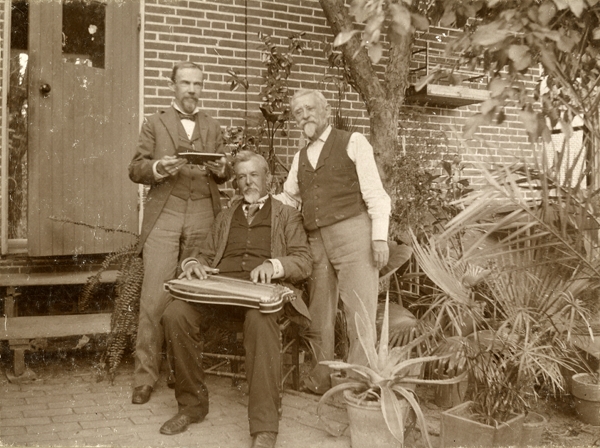
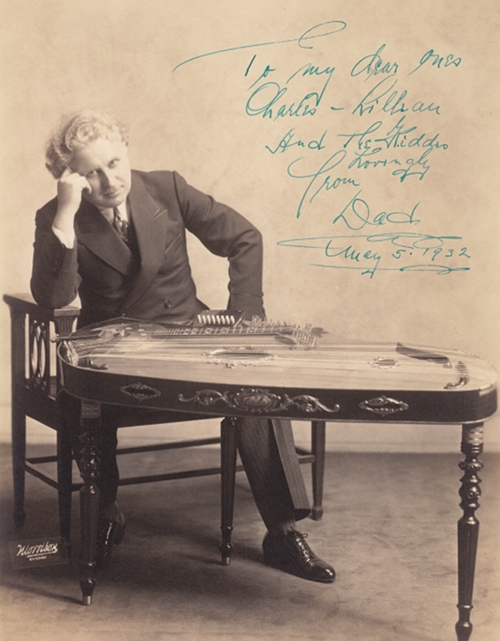
The scheitholt, whose form is the predecessor to the modern alpine zither, was constructed and played in the US by early German immigrants in the 18th and 19th centuries. In 1923, Dr. Henry Mercer presented his research of numerous zithers, then museum pieces, to members of the Bucks Country Historical Society.

As Germans immigrated to America, they typically settled in areas where there were family members, established communities or areas that reminded them of their homeland. One such area that was heavily settled by German immigrants is Pennsylvania.
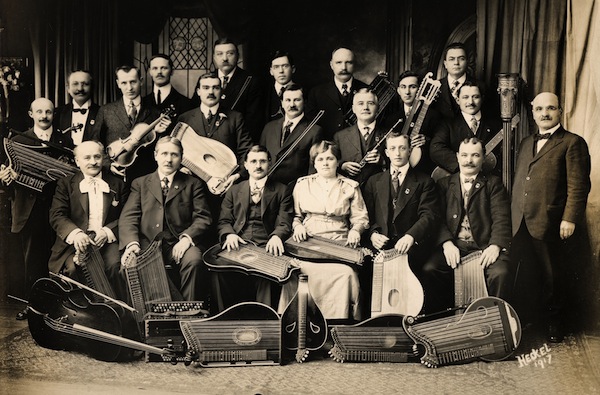
German immigrants brought their values, their religion, their preferences for food as well as their music. German music played during this period was often played on what is known as a zither. By the German immigrants who played and enjoyed them, they were known as "zitters". In Germany, the instrument was known as a scheitholt, which can be translated to "wooden stick" in English.

Read by Dr. Henry Mercer before members of the Bucks County Historical Society in 1923, the paper "The Zithers of The Pennsylvania Germans" details the museum's collection of zithers, seven of them being plectrum zithers with the remainder being bowed zithers. Although the exact tuning of the zithers in the collection is unknown, their method of playing and construction could be discerned by examination and through interviews conducted with members of the community who could recall how the instruments were constructed and played. Materials for the instrument used a combination of hand-crafted and store-bought pieces. The plectrums used were crude and were either pieces of wood, bone or quills.
Although no conclusions are drawn as to the origin of the zithers, comparisons to other instruments are made and their similarities are accented. One such instrument discussed is the "Dulicimore", known today as the dulcimer. This instrument, played in remote mountain regions of Kentucky and Tennessee is similarly constructed and is played in the same manner, either bowed or plucked with plectrum, as the zithers being examined. Dr. Mercer suggests that it is possible that the instrument was brought over by the English immigrants who inhabited this area. When plucked, quills or plectrums made of leather were also used.
With the assistance of colleagues, a number of similarly constructed instruments were located in a museum in Friesland, Holland. Here they were known as a "Hommel" or "Nordische Balk" and were also played in the same manner, either plucked with a plectrum or bowed. In addition to Holland, Dr. Mercer asserts that the zither form could also be found in Russia, France and Italy, although they are known by different names.

For those interested in the zither, the construction of early folk instruments and their expression within the community, "The Zithers of The Pennsylvania Germans" provides an interesting insight into the zither and the German immigrants of Pennsylvania. This article is archived and is available upon request from the Mercer Museum located in Doylestown, PA . For more information on this resource, as well as additional reading materials pertaining to the zither, see the Reading page.

Upcoming Events: The Mercer Museum will unveil a new exhibit, "Everyday Rhythms" on Saturday, September 13, 2008 showcasing the unique ways in which people have used musical sounds to express themselves throughout history. The exhibit will be on display until May 31, 2009. From the African drums to the Irish bagpipes, musical instruments have been used by humans in a variety of different ways in order to send signals, tell stories, uphold traditions, and give order to community life.
The "Everyday Rhythms" exhibit will trace the evolution of musical instruments using the Mercer Museum’s collection of 19th-20th century artifacts. The exhibit will focus mainly on four categories of instruments; the drums, banjo, bells, and zither (a stringed instrument in which strings are stretched across the length of the sound box.) The exhibit will highlight interesting facts about these instruments including how drums were used in early American communities to call people to worship and maintain unity and how the banjo, now associated with bluegrass music, originated in Africa, and was brought to America by African slaves. More fascinating stories will accompany the 40 musical instruments on display. Featured objects in the exhibit are a set of Civil War Military Drums, a Key Bugle and Hurdy Gurdy (wheel fiddle). Interactive audio stations invite visitors to explore the sounds of these instruments.
In the museum’s Imagination Gallery, visitors will also be able to experiment with hands-on reproductions of instruments similar to the ones on view and to create their own sounds and music. Younger visitors will enjoy books and games related to the exhibit’s theme.
According to Cory Amsler, the Mercer Museum’s Vice President for Collections and Interpretations, "Everyday Rhythms offers a great opportunity for us to explore some of the many meanings that musical instruments have signified for people across time and culture. Part of that exploration involves hearing the music itself, and we're especially excited that the new audio stations will give real voices to some long-silent instruments in our collection. With the audio, and plenty of hands-on "try-its," the exhibit combines listening, looking, and touching - and makes for a fun outing for the whole family."
A music concert series, instrument-making workshop, and special self-guided museum tours are just some of the special events surrounding the opening of Everyday Rhythms. To learn more about the exhibit and its special events , visit www.mercermuseum.org or call 215-345-0210.
Do you have stories or experiences pertaining to the zither that you would like to share with the community? If so, contact us.